Let's talk about your jaw for a second, because I don't think enough people realize it's something a chiropractor can actually help with.
If you've got a jaw that clicks or pops every time you take a big bite, feels tight or tired by the end of the day, or you wake up with a dull headache and a sore jaw and have no idea why, you might be dealing with TMJ dysfunction. TMJ stands for temporomandibular joint, which is just a fancy way of saying "the hinge that connects your jawbone to your skull." And like any joint in your body, it can get restricted, tight, and cranky.
I see this a lot in my Bridgewater, NJ patients, and it almost always comes as a surprise. People assume jaw pain means a trip to the dentist or an oral surgeon, and sometimes it does. But a huge piece of TMJ dysfunction isn't actually happening inside the mouth. It's the muscles and joints around the jaw: the neck, the upper back, even your posture at your desk all day. Your jaw doesn't operate in isolation. It's connected to a whole chain of muscles and joints, and when one link in that chain gets tight, the others compensate, and that compensation often shows up as jaw tension, clicking, or that "my jaw is just tired" feeling by dinner time.
So what's actually going on?
A lot of what I see traces back to the neck and upper back. Think about it: if you're hunched over a laptop for eight hours, your head drifts forward, your neck muscles tighten up trying to hold your head in place, and your jaw muscles get recruited to help out with that tension. Add in things like teeth clenching during a stressful week, an old whiplash injury that never quite resolved, or just years of poor posture, and you've got a jaw joint that's working overtime.
What treatment actually looks like at Anchor Chiro
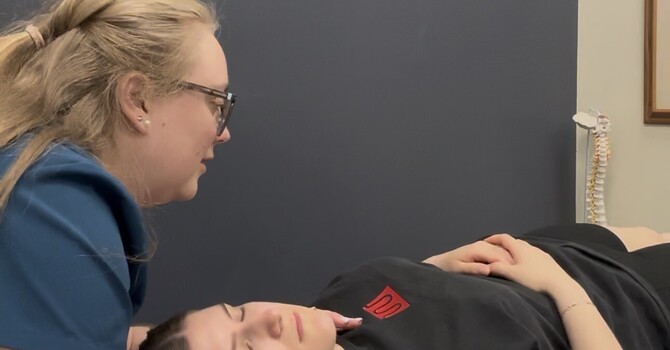
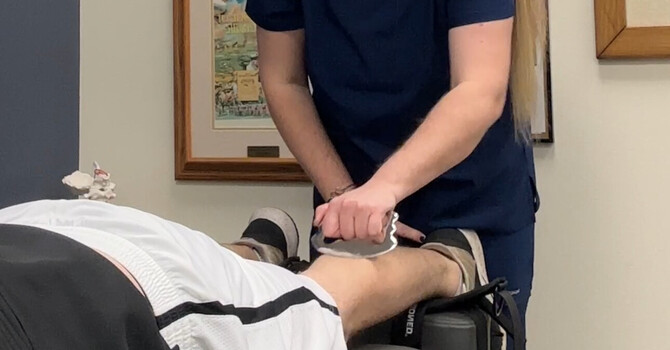
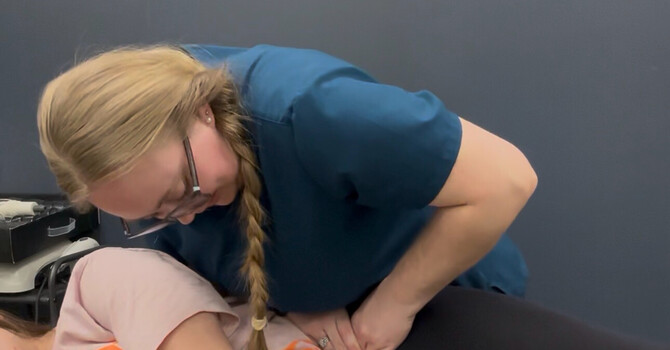
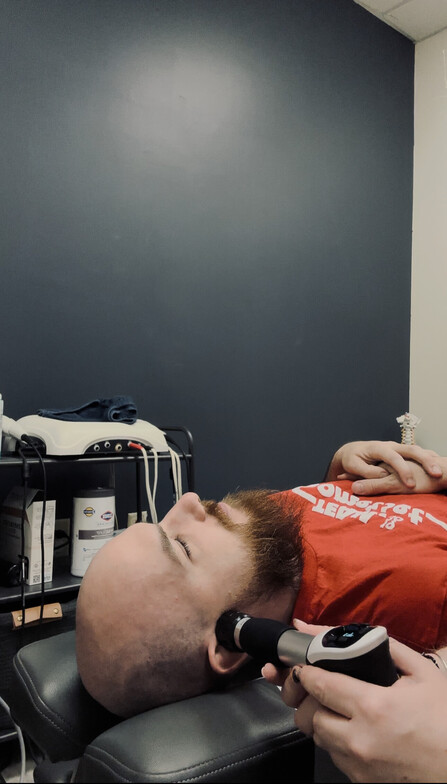
This is external, hands-on work, nothing inside the mouth. I start with a full assessment of the neck, upper back, shoulders, and jaw area to see where the real restriction is coming from, because treating the jaw alone without looking at the rest of the chain usually doesn't hold. From there, treatment might include gentle spinal adjustments to the neck and upper back, soft tissue work like Active Release Technique (ART) on the surrounding muscles (think jaw, temples, and neck), and some simple stretches or exercises you can do at home to keep things loose between visits.
Patients are often surprised at how much relief comes from working on the neck and shoulders instead of the jaw itself. It makes sense once you think about how connected the whole system is. I'm not just chasing the symptom, I'm looking at the whole picture of why that joint got overworked in the first place.
Who this helps
TMJ dysfunction shows up differently for everyone. Some patients have the clicking and popping. Some have jaw pain that radiates into headaches. Some just describe a constant low-grade tightness they can't quite shake. If any of that sounds familiar, and especially if it's been going on for weeks or months, it's worth having someone actually look at the whole picture instead of just the jaw itself.
Why this matters if you're in Bridgewater or nearby
A tight, achy jaw has a way of showing up in things you wouldn't expect: trouble chewing comfortably, tension headaches, even disrupted sleep if you're clenching at night. It's not something you have to just live with.
If you're local to Bridgewater, Somerville, or anywhere else in Somerset County and your jaw has been bothering you, let's take a real look at what's going on. I'll check the neck, shoulders, and jaw together, and build a plan that actually makes sense for your body.
Ready to stop living with a tired, tight jaw? Call or text 908-212-9732, or book online at anchorchironj.com and let's figure out what's really going on.

Kate Denker
Contact Me