Here's a scenario I see more often than you'd think. Someone comes into Anchor Chiro because their right shoulder is barking at them, and by the end of the visit we've figured out the real problem started at their hip. Not because I'm psychic, but because bodies are one connected system, and pain has a funny habit of showing up somewhere other than where it started.
That's exactly the kind of thing Kinetisense was built to catch.
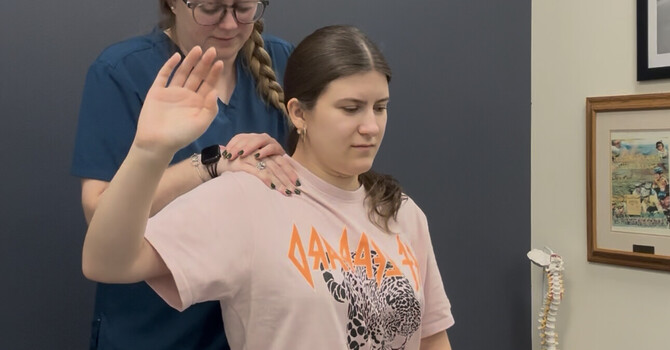
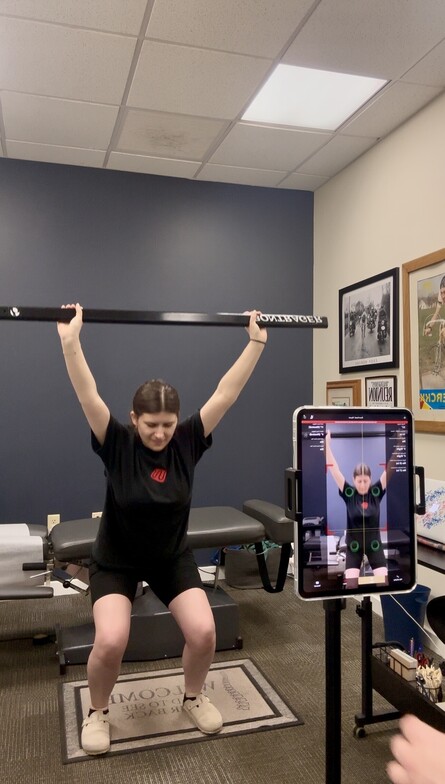
If you haven't heard of it, Kinetisense is an AI powered motion capture system we use here at Anchor Chiro to actually see how your body moves, not just guess at it. Instead of relying on my eyeballs alone (which, don't get me wrong, are pretty well trained), the technology tracks your joints in real time as you move through a series of simple screens: squatting, reaching, rotating, balancing on one leg while I try not to laugh at your face when I ask you to do it. It measures range of motion, symmetry between your left and right sides, and compensation patterns your body has quietly built up over months or years without you ever noticing.
Why does this matter more than it sounds like it should?
Most people don't come in until something already hurts. Totally understandable, that's usually what gets us to pick up the phone. But the interesting thing about movement dysfunction is that it almost always shows up before pain does. Your shoulder might have been losing rotation for a year before it finally complained loud enough to get your attention. Your hip might have quietly stopped bearing weight evenly every time you climb stairs, long before your knee started aching about it.
Kinetisense gives us a way to spot that stuff early, and to actually show it to you, in numbers and visuals, instead of me just saying "yeah, your left side seems tighter" and hoping you take my word for it.
Who this is genuinely useful for
Athletes and weekend warriors in Hillsborough and around Somerset County use it to catch asymmetries before they turn into torn muscles or blown out knees, especially heading into a new sports season or training cycle. Runners find it especially helpful, since so many running injuries trace back to a hip or ankle that isn't doing its fair share of the work.
Desk workers and parents chasing toddlers benefit too, honestly maybe even more. Years of sitting, bending, and lifting kids at weird angles build compensation patterns that feel completely normal until suddenly they don't. A Kinetisense screen can show us exactly where your body has been quietly cutting corners.
And if you're already a patient working through a treatment plan with us, whether that's for an old injury, ART work, or general adjustments, we can use it to track your actual progress over time. No more relying on "I think I feel better." We can show you the numbers moving in the right direction, which is honestly one of my favorite parts of using this tool.
What the assessment actually feels like
Nothing scary, I promise. No needles, no electrodes stuck to you, nothing invasive. You'll do a handful of functional movements in the office while the system tracks you, it takes maybe fifteen to twenty minutes, and then we sit down together and go through the results. I'll walk you through what your body is doing well, where it's compensating, and what that might mean for your risk of injury or for whatever's already bothering you. It's genuinely one of the more satisfying parts of my job, watching a patient's face when they finally see, in black and white, the thing their body has been trying to tell them for years.
Worth asking about
You don't need to be training for a marathon or nursing an old sports injury to get value out of a motion assessment. If you've ever thought "something just feels a little off, but I can't point to exactly what," this is often how we find it.
If that sounds like you, or if you're just curious what your own movement patterns look like on paper, give us a call or book online. We'll get you on the schedule, put you through the screen, and show you exactly what's going on under the hood, before it turns into the kind of pain that makes you Google your symptoms at 11pm.
Ready to see how you move? Book your Kinetisense assessment at Anchor Chiro today and let's catch small issues before they become big ones.

Kate Denker
Contact Me